Delphinium consolida Fancy Belladonna | Larkspur | Seeds
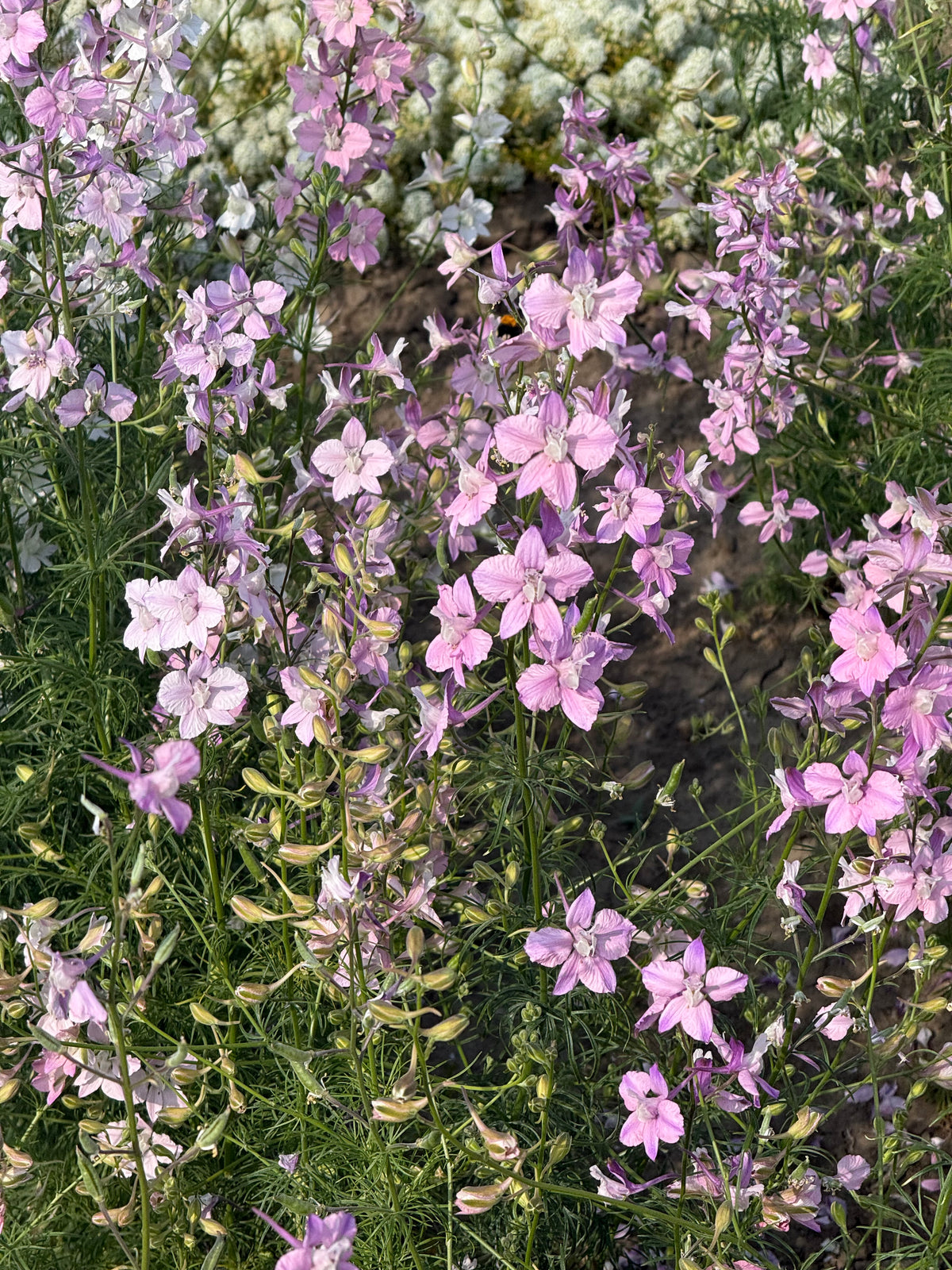
Larkspur Fancy Belladonna produces graceful flowering stems with delicate lilac blooms, purple markings and a contrasting white centre. Soft purplish-pink undertones give the flowers a gentle, romantic appearance.
Growing up to approximately 120 cm tall, this branching annual adds height and lightness to cottage gardens, mixed borders and cutting beds. Its elegant stems are suitable for fresh bouquets and can also be dried for seasonal arrangements.
Plant Information
Botanical name: Delphinium consolida
Common names: Larkspur, annual delphinium
Series: Fancy
Variety: Belladonna
Family: Ranunculaceae
Plant type: Hardy annual
Hybrid status: Non-hybrid
Flower type: Single, Belladonna-style blooms
Flower colour: Lilac with purple stripes and a white centre
Height: Approximately 90–120 cm
Plant spacing: Approximately 15–25 cm
Days to Bloom: Allow approximately 110–120 days from spring sowing as a general larkspur guide; timing varies with growing conditions
Position: Full sun
Soil: Fertile and well drained, preferably neutral to slightly alkaline
Flowering: Summer, potentially continuing into autumn depending on sowing time and climate
Vase life: Approximately 5–7 days with suitable harvesting and care
Uses: Cut flowers, dried flowers, cottage gardens and mixed borders
Lilac Flowers with Delicate Purple Markings
Fancy Belladonna’s distinctive colouring combines soft lilac petals with darker purple stripes and a pale centre. The open flowers give the flowering stems a lighter appearance than densely double larkspur varieties.
Combine with white, blush pink, lavender or deep purple flowers for harmonious bouquets. In the garden, plant behind lower-growing annuals so the tall stems can rise above the surrounding flowers.
Sowing & Germination
Preferred method: Direct sow into prepared soil
Alternative: Start in individual plug cells
Sowing depth: Approximately 0.5–0.6 cm
Cover seed: Yes; darkness is required for germination
Germination temperature: Approximately 10–15°C
Germination time: Usually 14–21 days under suitable conditions
Indoor sowing: Approximately 5–7 weeks before planting out
Cool conditions are important for successful germination. Excessive warmth can delay or reduce emergence. Avoid heated propagators and hot windowsills.
Direct Sowing
- Choose a sunny position and prepare a fine, weed-free seedbed.
- Sow in early spring while the soil is cool and workable.
- Cover seeds with approximately 0.5–0.6 cm of fine soil.
- Water gently and maintain even moisture without waterlogging.
- Thin seedlings after their true leaves develop, leaving approximately 15–25 cm between plants.
Direct sowing allows the roots to develop without transplant disturbance. Autumn sowing is also possible where winter conditions permit. Successful overwintering depends on local temperatures, drainage and protection.
Starting Indoors
Sow into individual cells filled with moist, well-drained seed compost. Cover the seeds and keep the trays cool.
After emergence, provide bright light and continue growing in cool conditions, around 13°C where practical. Warm rooms can encourage weak, stretched growth.
Harden seedlings off gradually and transplant while young, keeping each root ball intact. Avoid repeated pricking out and do not allow plants to become rootbound.
Is Cold Treatment Necessary?
Cold treatment is not always essential, but pre-chilling the seed for approximately 7 days at 2–4°C may improve germination. Use a refrigerator, not a freezer.
After chilling, sow as described above and maintain cool conditions. If emergence is slow, check temperature and moisture before discarding the seed tray.
Growing Conditions & Care
Choose full sun and fertile, well-drained soil. Avoid areas where water remains after rain.
Water regularly during establishment, then as needed to maintain steady growth. Feed according to soil fertility rather than applying excessive fertiliser.
Shelter plants from strong winds and install stakes or support netting before the stems become tall. Leave sufficient space for air to circulate.
Larkspur performs best during cooler weather. Early sowing helps plants establish before summer heat arrives.
Flowering & Further Cutting
For planning, allow approximately 110–120 days from spring sowing, although this is a general estimate rather than a confirmed variety-specific flowering time.
Remove faded flower stems before seed develops. Cutting back to a healthy side shoot may encourage smaller follow-on flowering stems.
Harvesting for Fresh Bouquets
Cut when the first few lower flowers have opened and most upper buds remain closed.
Harvest during the cooler part of the day, remove foliage below the waterline and place stems promptly into clean water. With good care, expect approximately 5–7 days of vase life.
Fancy Belladonna adds height and movement to loose garden bouquets, wedding arrangements and seasonal floral designs.
Drying Larkspur
For drying, allow more flowers to open along the stem, but harvest before the oldest blooms begin dropping petals.
Remove excess foliage and hang small bunches upside down in a dry, shaded, well-ventilated place.
Important: All parts of larkspur, including the seeds, are toxic if ingested. Keep seeds and plants away from children and pets. The flowers are not edible.