Skip to product information
1 of 1

therapyofflowers.com

Antirrhinum majus Admiral Pink F1 | Group 1 | Snapdragon

Antirrhinum majus Admiral Pink F1 | Group 1 | Snapdragon

Regular price €1,70 EUR
Regular price Sale price €1,70 EUR
Sale Sold out
Taxes included. Shipping calculated at checkout.
Package contains

Antirrhinum majus Admiral Pink F1 | Group 1 | Snapdragon Seeds

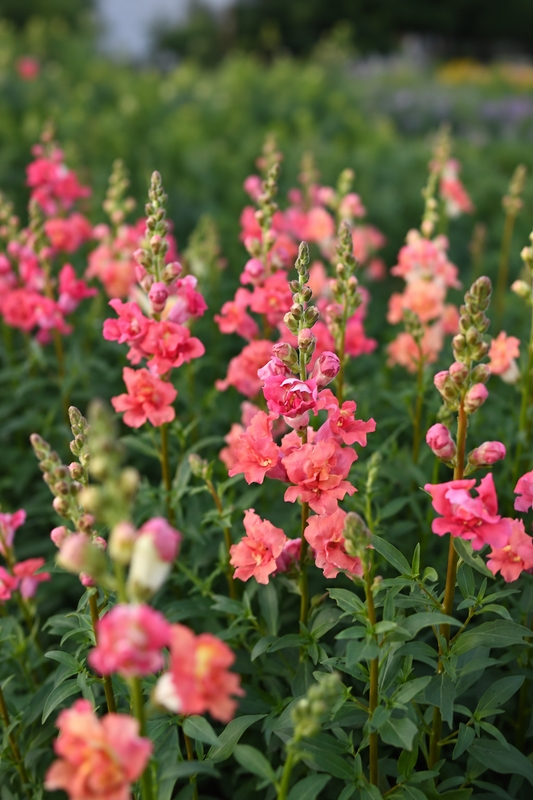
Snapdragon Admiral Pink F1 produces elegant pink flower spikes on tall stems, bringing colour and vertical structure to cutting gardens and bouquets. Closely spaced florets create long, well-filled spikes that combine beautifully with roses, lisianthus and other seasonal flowers.

This early-flowering Group 1 hybrid is selected for uniform growth and flowering under short-day conditions. It is particularly suited to cool-season cut flower production, with late autumn, winter and early spring harvests possible under suitable protected conditions.

Plant Information

Botanical Name: Antirrhinum majus
Common Name: Snapdragon
Variety: Admiral Pink F1
Flowering Group: 1
Plant Type: Usually grown as an annual
Flower Colour: Pink
Height: Approximately 80–100 cm
Habit: Upright, with long flower spikes
Position: Sunny, with good light
Soil: Rich in organic matter and well drained
Seed Form: Unpelleted
Seedling Production: Approximately 4–5 weeks
Sowing to First Harvest: Approximately 16–20 weeks
Uses: Cut flowers, mixed borders and protected flower production

Pink Flower Spikes for Bouquets

Admiral Pink F1 adds soft pink colour and a distinctive upright shape to floral arrangements. Its closely spaced flowers form attractive spikes for mixed bouquets, pairing especially well with white, cream, lavender and apricot blooms.

Plants reach approximately 80–100 cm, making them suitable for cutting beds and the middle or back of mixed borders. Support netting helps keep the tall stems straight.

What Does Group 1 Mean?

Snapdragon flowering groups help growers select varieties for different light and temperature conditions.

Group 1 varieties are suited to cooler temperatures, lower light levels and short days. Admiral Pink F1 is therefore a useful choice for cool-season production rather than peak-summer scheduling.

Winter flowering requires suitable greenhouse conditions. The Group 1 designation does not mean plants will flower outdoors through a cold winter.

Sowing & Germination

Sowing Method: Indoors or in a greenhouse for transplanting
Sowing Depth: Surface sow; light is required for germination
Germination Temperature: Approximately 18°C
Initial Germination Stage: Approximately 7 days under suitable conditions
Transplant Stage: Around 30 days, once seedlings have two pairs of true leaves

Sow onto a fine, moist, well-drained seed compost and gently press the seeds into place. Do not bury them. A very light covering of coarse vermiculite may be used, provided light can still reach the seeds.

Maintain even moisture without saturating the compost. After emergence, provide good light and ventilation, with temperatures around 15–18°C, gradually reducing to 13–15°C as seedlings develop.

Feed lightly, as young snapdragons are sensitive to excessive fertiliser. Transplant promptly when ready, before the roots become crowded.

Planting & Care

Plant into well-drained soil enriched with organic matter. For intensive, single-stem cut flower production, the recommended density is approximately 85–110 plants per m², depending on available light. Install support netting early.

Water regularly without leaving the soil waterlogged. Allow the surface to dry slightly between waterings, but avoid wilting. Watering early in the day helps foliage dry before night.

Feed moderately: excessive fertiliser can encourage unwanted side shoots. Maintain good airflow around the plants.

For professional Group 1 production, the recommended night temperature is approximately 7–13°C. Cooler conditions generally improve stem quality but can lengthen the growing period.

Flowering & Harvest

Allow approximately 16–20 weeks from sowing to the first harvest. Actual timing depends on light, temperature and growing conditions.

Cut when 3–4 individual flowers are open on the spike. Remove the lower leaves and place the stems immediately in clean water with cut flower food. Keep freshly cut stems upright to help prevent bending.

View full details