Grower Tip from Therapy of Flowers — Starting Snapdragons from Seed
For us as flower growers, it is important to grow flowers that are not only beautiful and in demand, but also reliable, productive, and able to provide a steady harvest when needed.
Snapdragons are the perfect cut flower for that balance. They offer not only strong aesthetic value, but are also incredibly productive when it comes to filling seasonal bouquets or simply when more flowers are needed.
For us, snapdragons are a truly unique cut flower.
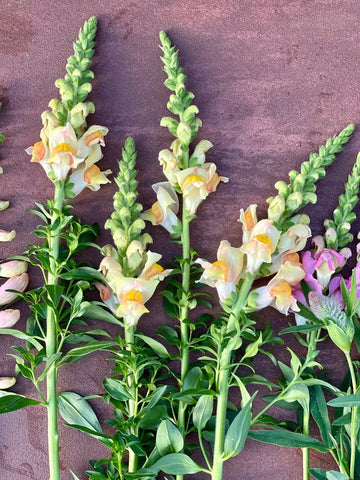
Growing snapdragons is a smart investment for anyone planning to create a small cut flower garden, as they not only look beautiful but are also easy to care for once you understand the key growing principles.
Snapdragons are divided into four groups based on the light intensity, temperature, and day length required for optimal growth and flowering. This classification was originally developed for greenhouse production, but with proper planning, they also perform very well outdoors. Each group is adapted to specific seasonal conditions:
- Group 1: Varieties such as Chantilly, Legend, and Maryland are suited to cold conditions and short days, making them ideal for flowering in late winter or early spring.
- Group 2: Avignon, Animation, Overture, and Maryland grow in slightly warmer conditions with longer days, suitable for early to late spring plantings.
- Group 3: Monaco, Potomac, Opus, and Madame Butterfly are medium day-length varieties that flower in spring and early summer.
- Group 4: Opus, Rocket, Madame Butterfly, and Potomac are adapted for summer growing, when days are longer and temperatures are higher.
By choosing varieties from different groups, you can ensure continuous snapdragon flowering throughout the entire season.
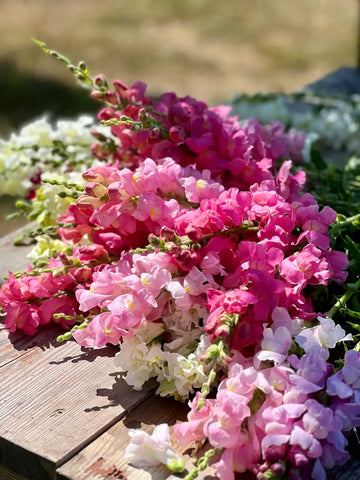
IMPORTANT TO REMEMBER: Snapdragons in Groups 1 and 2 flower best in spring, when temperatures are cooler and days are shorter with softer light. Meanwhile, Group 3 and Group 4 varieties perform best during the warm summer period, when light is stronger and days are longer.
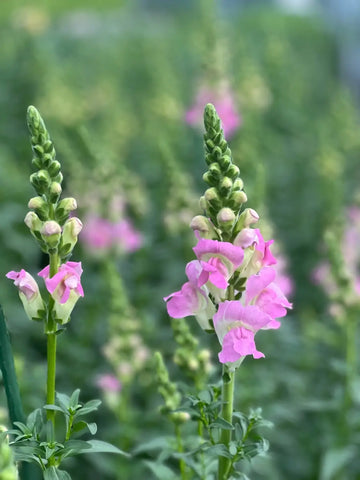
Lauvmutītes Legend Light Pink
For early flowering, we usually choose to grow Group 1 and Group 2 snapdragons, mainly the Legend and Avignon varieties. In spring, these flowers are full and abundant, but around early June the blooms become smaller and no longer develop as well as they do in spring. We usually stop growing these varieties by the end of the spring season.
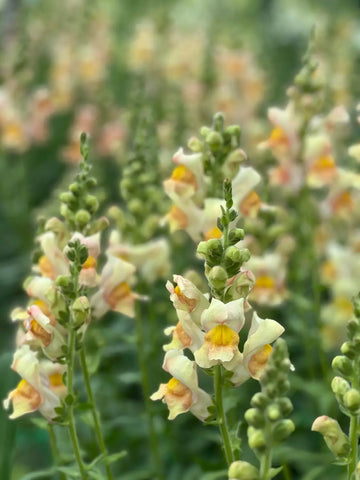
Lauvmutītes Costa Apricot
During the summer months, we grow Madame Butterfly and Potomac (also Rocket and Monaco) varieties, which provide flowers throughout the entire summer. These varieties produce blooms continuously, sometimes yielding up to ten stems from a single plant at the same time. Their stable flowering and excellent performance in heat allow us to rely on them when other flowers slow down.
Snapdragon Seeds: An Investment That Pays Off
Snapdragon seeds bred specifically for cut flower production are usually more expensive than those intended for bedding or decorative use. However, their exceptional quality and high germination rates make them a worthwhile investment. These seeds are truly valuable, and their price is fully justified.
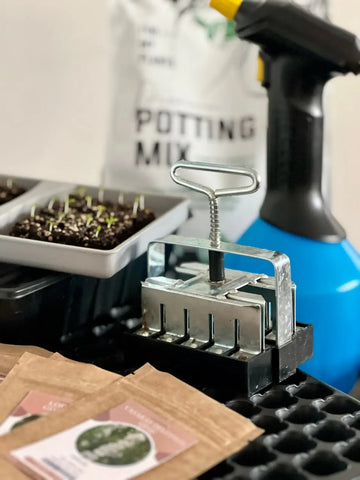
Plan Ahead!
Snapdragons require a long growing period, averaging around 100–120 days from sowing to flowering. That means these flowers need to be planned well in advance to ensure blooms for important events such as weddings.
Although Group 1 snapdragon varieties, such as Chantilly, need only about 100 days from sowing to flowering, it may sound short at first — but realistically, that is more than three months.
Group 3 and Group 4 snapdragons, on the other hand, require around 120 days, which is roughly one third of a year.
So, if you want snapdragons to flower at a specific time, they must be started earlier than many other flower varieties.
Sowing Snapdragons
Snapdragon seeds are very small and black, and sowing them can truly be a challenge at first — but once established, they are very easy to grow.
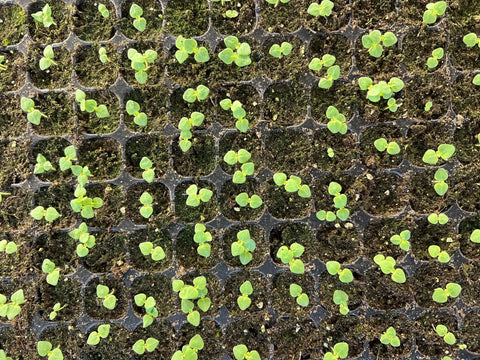
We sow snapdragon seeds in 288-cell trays, carefully placing 1–2 seeds in each cell. To make positioning the seeds easier, we use a moist toothpick to move them into place. Remember — snapdragon seeds need light to germinate, so do not cover them with soil or vermiculite. Seeds usually begin to germinate within just a few days.
Snapdragon Germination
Snapdragons prefer a warm environment (around 21 °C) and plenty of light. Seeds typically begin to germinate within 4–7 days. After germination, they should be placed under a strong light source or powerful grow lights to prevent seedlings from becoming leggy
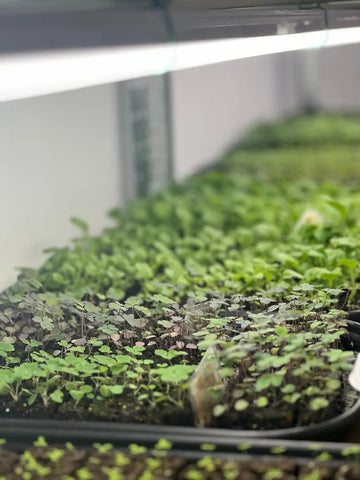
Snapdragons can be grown in both warm and cooler conditions — in warmer temperatures they grow slightly faster, but there is a greater risk of them drying out, so care should be taken.
If seeds are grown in a clean environment, problems such as rot or other diseases should not occur. However, it is important to maintain high humidity to ensure successful germination. We usually place a clear plastic cover over each tray to create optimal conditions and help seedlings easily shed the seed coat. If the soil is too dry, the seed can get stuck and fail to germinate.
Growing Snapdragons: Care After Germination
Growing snapdragons is generally uncomplicated. During the first weeks, we do not apply any additional fertilizer — we begin feeding only once the first true leaves appear. It is important to remember that seed trays or mini soil blocks (if seeds are sown in soil cubes) should always be watered from below. For watering, we usually add VITO-1, which is specifically suitable for this growth stage.
Planting Snapdragons: How to Transplant Young Seedlings Correctly
Snapdragons can be planted out in relatively cool weather — they actually prefer a long, cool growing period. During this time, the plants focus on developing a strong root system before putting energy into top growth, which results in larger, taller, and more beautiful flowers later on.
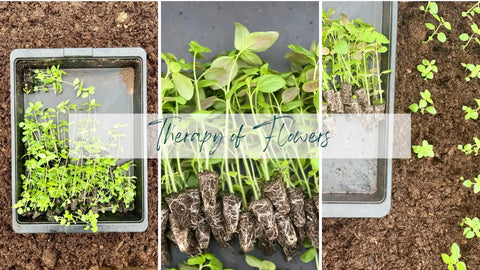
Snapdragons can be transplanted into their permanent growing place even when they are still quite small. In mini soil blocks or 288-cell trays, they usually develop a strong enough root system to successfully handle transplanting.

It is important to remember that snapdragons grown for cut flowers need support netting. This netting helps keep the plants upright and allows them to grow straight, preventing bending or falling over. This type of support is especially important for maintaining flower quality and appearance, as well as making harvesting easier. By providing proper support, you encourage healthy plant development and achieve strong, beautiful stems for bouquets.
Harvesting Snapdragons: Tips and Techniques
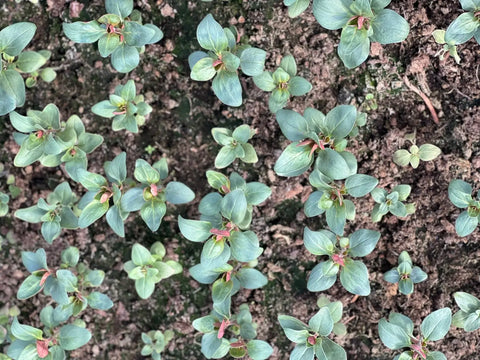
After transplanting, snapdragons usually begin to grow larger and bushier. Soon after, they shift into vertical growth, forming one strong central flower stem. We typically wait for this large central bloom, but you don’t have to — you can also pinch it out early to encourage multiple smaller, yet still very beautiful, side stems.
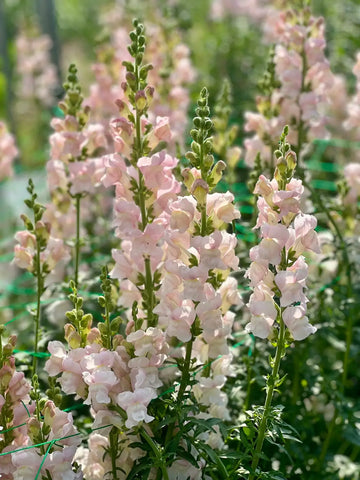
Whenever you harvest snapdragons, make sure to cut them as low as possible — right at the base of the plant. If you cut the stem halfway, you will end up with an awkward, branched stem with several short flower stalks at the top. By cutting down to the base, you encourage the development of long, beautiful side stems. It may seem unusual, but trust us — it really works. The next flush of snapdragons will produce longer stems, although the flowers will be slightly smaller than the first central bloom.
We recommend harvesting snapdragons when the lower flowers are about ⅓ to ½ open, while the upper flowers are still in bud.
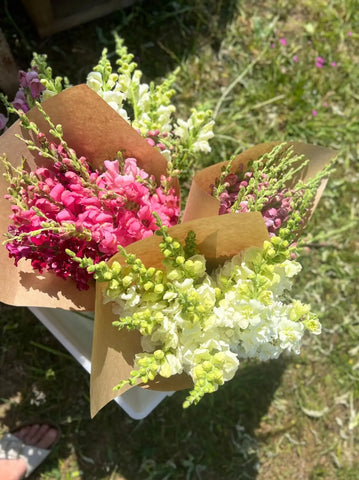
After cutting, the flowers should be placed in cool water and allowed to rest in a dark, cool place. It is especially important to keep the stems standing upright, as snapdragons are geotropic. If the flowers are placed at an angle in the bucket, they will begin to bend upward. Cut stems can be wrapped in paper and kept vertical in a bucket of water.