Eucalyptus citriodora | Lemon Scented Gum
Highly aromatic eucalyptus with fresh green foliage and an intense natural lemon fragrance, ideal for cut foliage, containers and ornamental planting.
Botanical name: Eucalyptus citriodora
Accepted botanical name: Corymbia citriodora
Common names: Lemon Scented Gum, Lemon Eucalyptus, Lemon Gum
Family: Myrtaceae
Plant type: evergreen ornamental tree; tender perennial in colder climates
Seed form: natural, non-pelleted seeds
Use: cut foliage, bouquets, containers, ornamental planting and landscaping
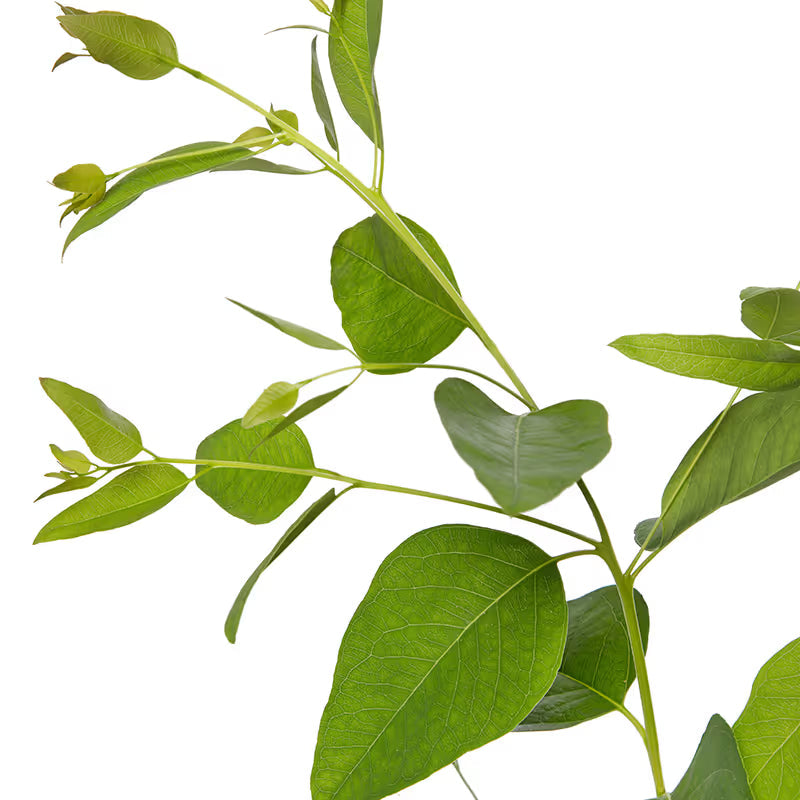
Eucalyptus citriodora, commonly known as Lemon Scented Gum, is a beautiful, fast-growing eucalyptus prized for its elegant fresh green foliage and exceptionally strong citrus fragrance. When touched or crushed, the leaves release an unmistakable fresh lemon scent, making this one of the most aromatic eucalyptus species.
The young plants produce attractive green foliage on upright, branching stems that are excellent for bouquets, wedding floristry and natural garden-style arrangements. The foliage can be used fresh or dried for later use.
In its native Australia, Lemon Scented Gum develops into a large evergreen tree. In colder climates, however, it can easily be grown as an annual foliage crop or container plant. Regular cutting and pinching help control its height and encourage the production of fresh side shoots for floristry.
Why grow Eucalyptus citriodora?
- Strong, natural lemon fragrance
- Fresh green, aromatic foliage
- Excellent greenery for bouquets and floral arrangements
- Fast-growing eucalyptus from seed
- Can be grown as an annual for cut foliage
- Suitable for pots and large containers
- Responds well to pruning and regular harvesting
- Foliage can be used fresh or dried
- Excellent for wedding and event floristry
- Attractive ornamental plant for sunny locations
Plant information
Plant type: evergreen tree; tender perennial in colder climates
Natural growth: develops into a large tree in warm, frost-free climates
Container growth: size can be controlled through pruning and container size
Light: full sun
Growing location: greenhouse, containers or outdoors during the frost-free season
Foliage: aromatic, fresh green; becoming longer and more lance-shaped as plants mature
Fragrance: strong lemon/citrus scent
Flowers: white on mature plants
Seed form: raw seed
Use: cut foliage, containers, ornamental planting and landscaping
Winter hardiness: not reliably frost-hardy in northern European climates; established plants may tolerate only light, brief frost
Plant height and development will vary considerably depending on sowing time, climate, container size, temperature, pruning and the length of the growing season.
Sowing instructions
Sow eucalyptus seeds on the surface of a fine, moist and well-drained seed-starting substrate.
Press the seeds gently onto the surface. Do not cover deeply, as light is beneficial for germination. A very thin layer of vermiculite may be used to help maintain even moisture.
Recommended germination temperature: approximately 20–22°C
Expected germination: germination can be variable and may take several weeks
Light: beneficial for germination
Keep the seed tray in a warm, bright position and maintain consistent moisture until germination occurs.
Moisture and humidity during germination
Keep the substrate evenly moist during germination, but avoid waterlogging.
Do not allow the growing medium to dry completely while the seeds are germinating.
Once seedlings begin to emerge, gradually improve ventilation and allow the surface of the substrate to dry slightly between waterings.
Good airflow is important for healthy seedling development and helps reduce problems caused by excessive humidity.
Light and temperature
After germination, provide the seedlings with plenty of bright light to encourage strong, compact growth.
Young seedlings should initially be protected from extreme heat and intense direct sunlight. Gradually increase their exposure as they become established.
Eucalyptus generally develops best with high light levels and good air circulation.
Do not expose seedlings or young plants to frost.
Feeding young plants
Young eucalyptus seedlings can be sensitive to excessive fertiliser and high salt levels.
Begin feeding only once the seedlings are established and actively growing. Use a complete, balanced fertiliser at a low concentration, gradually increasing feeding as the root system and foliage develop.
Avoid excessive nitrogen, which can result in overly soft growth.
Growing on
Transplant young plants once they have developed a healthy root system and the roots begin reaching the edge of the plug or cell.
Handle seedlings carefully, as eucalyptus plants generally perform best when excessive root disturbance is avoided.
Use a light, well-drained growing medium and provide plenty of light.
Water thoroughly, then allow the upper layer of substrate to dry moderately before watering again. Never allow the roots to remain standing in water.
Once established, Lemon Scented Gum grows rapidly under warm, bright conditions.
Pinching and branching
When growing Eucalyptus citriodora for cut foliage, pinching and regular pruning are highly beneficial.
Pinching the main growing tip encourages the plant to develop more side shoots, producing a fuller and better-branched plant.
Regular harvesting has a similar effect and encourages the production of additional stems throughout the growing season.
This also makes it possible to maintain the plant at a manageable height rather than allowing it to develop naturally into a tree.
Outdoor cultivation and overwintering
Move plants outdoors only after the risk of frost has passed.
Gradually acclimatise young plants to outdoor conditions and choose a warm, sunny and sheltered position.
In regions with cold winters, Lemon Scented Gum is best grown as:
- an annual cut-foliage crop;
- a seasonal container plant; or
- a large potted specimen that can be moved indoors for winter.
Container-grown plants should be moved to a bright, cool and frost-free location before the first significant frost.
Reduce watering during winter, but do not allow the root ball to dry out completely.
Harvesting for cut foliage
Harvest stems when they have reached the desired length and the foliage is sufficiently developed.
For best quality, cut during the cooler part of the day and place the stems immediately into clean water.
Remove leaves that would sit below the waterline.
Regular cutting encourages branching and helps the plant produce additional harvestable stems throughout the season.
Uses in floristry
The beautifully fragrant foliage is ideal for:
- Fresh seasonal bouquets
- Wedding and event floristry
- Table arrangements
- Large floral installations
- Natural garden-style arrangements
- Foliage-focused designs
- Wreaths
- Dried floral arrangements
- Professional cut-foliage production
Its fresh green colour works beautifully with white, cream, blush, apricot, yellow, lavender, blue and warm autumnal flowers.
The distinctive citrus fragrance also adds another sensory element to bouquets and arrangements.
Drying the foliage
Lemon Scented Gum foliage can also be dried for later use.
Harvest healthy stems and hang them upside down in a dry, well-ventilated location away from strong direct sunlight.
The dried stems are suitable for wreaths, dried bouquets and long-lasting floral decorations.
Natural lemon fragrance
One of the most distinctive characteristics of Eucalyptus citriodora is its naturally aromatic foliage.
The leaves contain essential oils rich in citronellal, which gives them their characteristic lemon fragrance.
The scent becomes particularly noticeable when the leaves are touched, rubbed or crushed.
Important information
This eucalyptus is primarily cultivated for its highly fragrant decorative foliage rather than its flowers.
In its natural habitat, Eucalyptus citriodora can eventually become a very large tree. When grown for floristry or in containers, its size can be controlled through regular pruning, harvesting and container size.
It is not reliably winter-hardy in northern European climates and should be protected from frost. In colder regions, it is most practical to grow it as an annual foliage crop or as a container plant that can be overwintered in a frost-free location.