Pāriet uz produkta informāciju
1 no 2

therapyofflowers.com

Nigella papillosa Eclipse | Spanish Love in a Mist

Nigella papillosa Eclipse | Spanish Love in a Mist

Parastā cena €2,50 EUR
Parastā cena Pārdošanas cena €2,50 EUR
Izpārdošana Izpārdots
Taxes included. Shipping calculated at checkout.
Package contains
Height

Nigella papillosa Eclipse | Spanish Love-in-a-Mist | Seeds

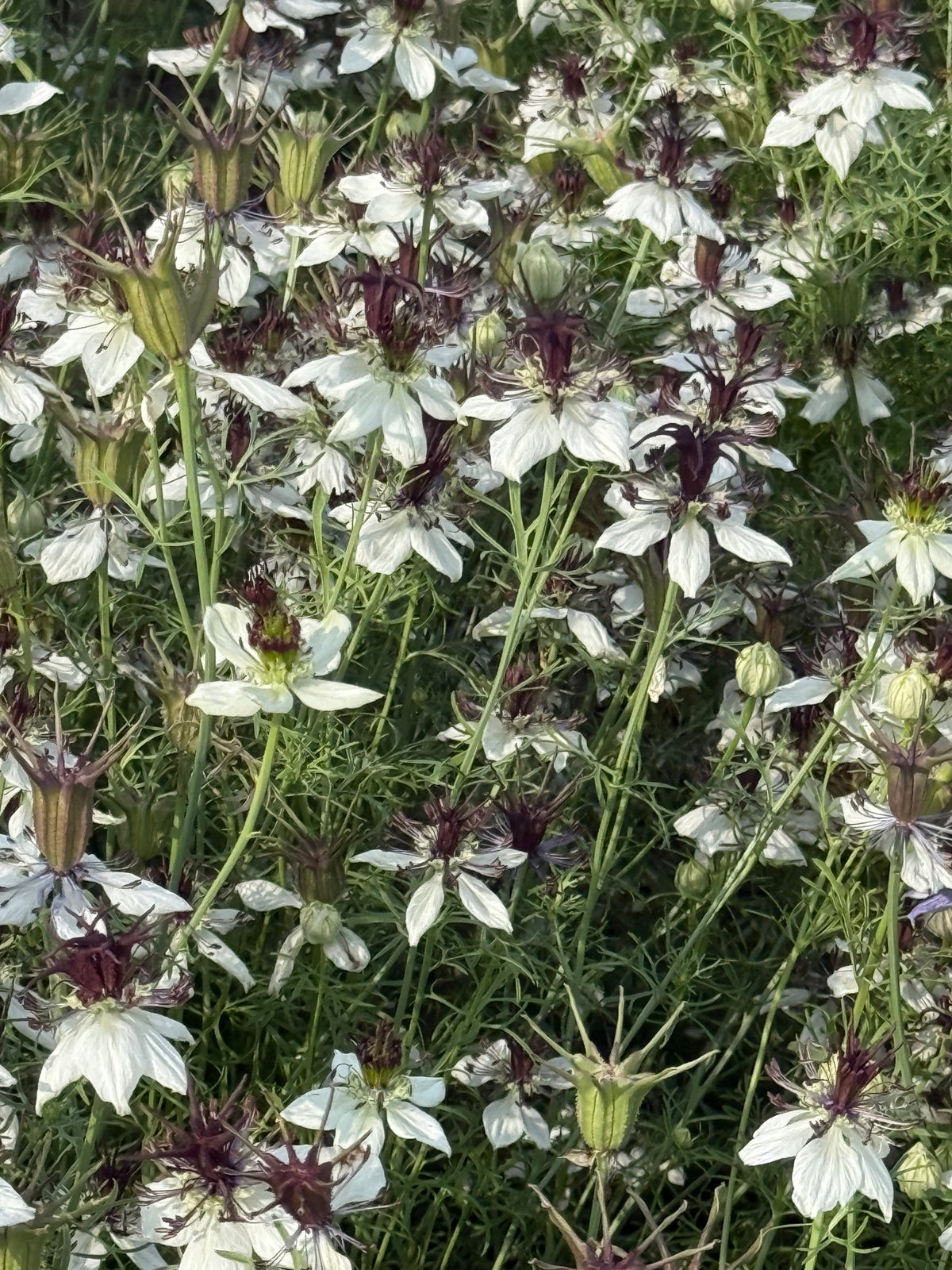
Nigella Eclipse, also known as African Bride, is an elegant annual with large, pure white flowers and a striking, almost black centre. After flowering, decorative dark seed pods extend its appeal, providing beautiful material for fresh and dried arrangements.

Growing approximately 80–90 cm tall, Eclipse forms upright, branching stems with finely divided foliage. Its white flowers and dark details bring contrast and an airy texture to cottage gardens, mixed borders and romantic bouquets.

Plant Information

Botanical name: Nigella papillosa
Common name: Spanish love-in-a-mist
Variety: Eclipse
Also known as: African Bride
Family: Ranunculaceae
Plant type: Hardy annual
Seed type: Open-pollinated, not an F1 hybrid
Plant habit: Upright and branching
Flower colour: Pure white with a dark, almost black centre
Seed pods: Decorative, dark purple to almost black
Height: Approximately 80–90 cm
Plant spacing: Approximately 23–30 cm
Days to Bloom: Allow approximately 65–85 days as a general nigella guide; exact timing for Eclipse depends on growing conditions
Position: Full sun
Soil: Moderately fertile and well drained
Flowering: Summer, depending on sowing time and climate
Pinching: Not necessary
Uses: Cut flowers, ornamental pods, dried arrangements, cottage gardens and mixed borders

White Flowers with a Dramatic Dark Centre

Eclipse combines fresh white blooms with a bold, dark centre. The contrast makes each flower stand out, while the finely divided foliage keeps the overall appearance light and delicate.

Grow it alongside pale pink, lavender, blue or burgundy flowers, or use it in a white garden. Its graceful stems are particularly attractive in loose, natural bouquets and wedding arrangements.

After the petals fall, the developing seed pods offer a second harvest with a completely different texture.

Sowing & Germination

Recommended method: Direct sowing
Alternative: Start in individual plug cells
Sowing depth: Approximately 0.5 cm
Germination temperature: Approximately 15–18°C
Germination time: Usually 7–14 days under suitable conditions; occasionally longer
Indoor sowing: Approximately 4–6 weeks before planting out

Cover the seeds with a thin layer of soil, as darkness supports germination. Keep the substrate evenly moist without waterlogging.

Direct Sowing

Direct sowing is preferable because nigella dislikes root disturbance.

  1. Prepare a fine, weed-free seedbed in a sunny position.
  2. Sow thinly in early spring, once the soil can be worked.
  3. Cover with approximately 0.5 cm of soil and water gently.
  4. Maintain even moisture until seedlings emerge.
  5. Thin young plants to approximately 23–30 cm apart.

For a longer supply of flowers and pods, sow small batches every 2–3 weeks during the early growing season.

Autumn sowing is possible where winter conditions are suitable. Good drainage is important, and plants may need protection in colder climates.

Starting Indoors

Sow into individual cells to minimise root disturbance. Cover lightly and keep at approximately 15–18°C.

After emergence, provide plenty of light and avoid excessive warmth. Harden off before planting outdoors.

Transplant while seedlings are young, keeping the root ball intact. Avoid repeated pricking out or allowing plants to become root-bound.

Growing Conditions & Care

Choose full sun and moderately fertile, well-drained soil. Avoid excessive feeding, especially nitrogen, which can encourage foliage at the expense of flowers.

Water regularly during establishment and prolonged dry periods. Established plants tolerate some dryness, but moderate, consistent moisture supports steady growth.

Pinching is not necessary. In windy locations, light support can help keep the slender stems upright.

Leave selected stems to develop decorative pods. Remove pods before they open if you wish to prevent self-seeding.

Harvesting Flowers & Seed Pods

For fresh flowers: Cut when buds are fully coloured and beginning to open. Harvest during the cooler part of the day, remove leaves below the waterline and place stems promptly into clean water.

For fresh pods: Allow the pods to develop their distinctive shape and dark colouring before cutting.

For drying: Harvest well-developed, firm pods before they split and release their seeds. Tie into small bunches and hang upside down in a dry, shaded, well-ventilated place.

Growing several plants lets you enjoy both the white flowers and the decorative pods throughout the season.

View full details